When Rebranding Works – and When It Doesn’t. Lessons from Eastern State and the Philadelphia Museum of Art
Rebranding is rarely just about design. It’s about meaning, memory, and momentum – and when those forces aren’t aligned, even well-intentioned efforts can unravel quickly.
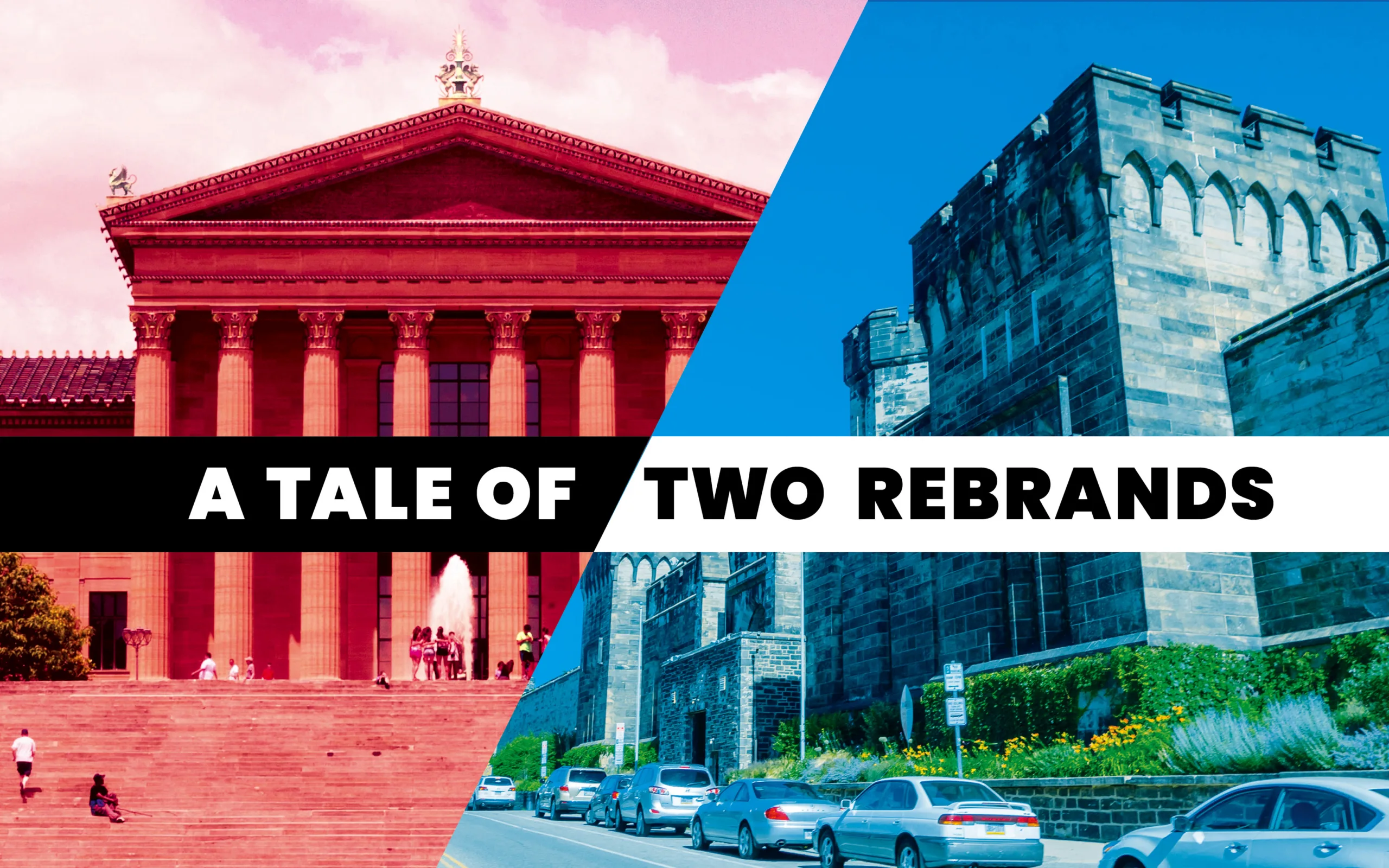
Two recent Philadelphia case studies illustrate this clearly: the rebrand of Eastern State Penitentiary and the attempted rebranding of the Philadelphia Museum of Art.
One clarified and amplified what already made an institution powerful. The other became a cautionary tale in how quickly brand equity can be put at risk.
Full disclosure – Finch Brands collaborated with Eastern State on their work, so we can speak to the underlying process, insights, and leadership approach. We were not involved in the PMA project, and, while there has been extensive media coverage, I try not to be too critical without all the facts.
Still, it is clear that one succeeded and one failed – here are a couple of key reasons why:
Start with Stakeholders – Or Be Prepared to Backtrack
Eastern State’s rebrand was rooted in a deep understanding of its audiences and its evolving role. The organization had already articulated a forward-looking strategy – expanding from a historic site into a national platform for justice education, civic dialogue, and reform.
The brand became the expression of that truth – not a departure from it. Programs like Justice 101 and the Center for Justice Education weren’t add-ons; they were central to the identity.
Contrast that with the PMA rebrand. The move to “Philadelphia Art Museum” (and the “PhAM” shorthand) was met with immediate resistance – not just from the public, but from core stakeholders including staff, trustees, and members. Within months, the institution reversed course after surveys showed overwhelming preference for the original name.
This suggests that bringing stakeholders along – Board, staff, members/visitors, and beyond – is vital to not only understand the history, but to engineer a successful outcome that everybody can get behind.
Takeaway:
If your most important stakeholders don’t see themselves in the outcome, the market will correct you – often quickly, publicly, and painfully.
-
‘Keep the Main Thing the Main Thing’
Eastern State had a positioning challenge, not a naming problem. Its name was distinctive and ownable. The real opportunity was to clarify what it stood for today.
So the work focused on elevating its mission: connecting past and present to inspire a more just future. And we worked backwards from that, evolving nomenclature only because it was necessary. Removing ‘Penitentiary’ from the organizational identity was seen as essential to expanding influence beyond just the physical walls of the site.
At PMA, the intent was a new visual identity that advanced a bolder, more contemporary energy for the museum – but the center of gravity (and criticism) shifted to the name itself. And that’s where things got complicated.
While the new look and feel had proponents and detractors, the rationale behind the intended name change – from PMA to ‘Philadelphia Art Museum’ – was never persuasively advanced. As the museum’s own leadership later acknowledged, “changing the name for no obvious reason” contributed to the backlash.
The net effect was a massive unforced error – concentrating opposition around a topic that wasn’t even essential to the initiative in the first place.
Takeaway:
Change for change’s sake is inadvisable. Focus on what matters to achieve the objective.
-
Brand Equity Is More Fragile Than It Looks
Eastern State’s approach respected its existing equity – the architecture, the history, the emotional resonance – while expanding its meaning. The brand evolved, but it didn’t disorient.
At PMA, the opposite dynamic emerged. Stakeholders weren’t just confused – they felt a sense of loss. The original name “resonates… it’s who we are,” as leadership later noted.
Even though elements of the rebrand (like the griffin logo) were well received by many, the name change overwhelmed everything else and became the story.
Takeaway:
You can modernize brand expression. But if you tamper with identity, you need a very strong case – and a very careful path.
-
Process Matters Just as Much as Content
One of the more telling details in the PMA situation was how the work came to market. As criticisms mounted, a ‘circular firing squad’ ensued with Board members claiming to have been surprised and out of the loop.
That’s not just a communications issue – it’s a governance issue. And, as has later come out, it was a symptom of a larger problem.
At Eastern State, the rebrand was part of a broader strategic journey, tied to a multi-year plan and organizational priorities. It wasn’t a moment; it was a movement.
Takeaway:
A brand launch is a test of alignment, not just creativity. The process needs to have had integrity for even great work to be well-received.
These two examples are easy to compare – prominent cultural institutions in the same region, launched in the same calendar year, with very different outcomes.
But more broadly, these stories yield a simple gut check for leaders:
Before you rebrand, ask:
- Do our core stakeholders believe change is necessary?
- Are we solving something real – or just chasing modernity?
- What are the changes – internally and/or externally – that the brand will express?
- What equity are we risking – and is the upside worth it?
If those answers aren’t clear, proceed with caution.
And if you’re still inspired to pursue a Name Change, be sure to start here.